Drew Garrison

Drew Garrison

Head of Content – AI-Native Content Operations

I explain new, complicated products to the people who need to understand them, and I build the systems that let a small team do it well.

Twelve years of growing audiences and revenue, from leading a writing team to running a full content function with AI. Judgment, taste, fact-checking and approvals stay with people.

Track record

2014 to now
2014Silver Screen and RollEditor in chief+260%

Traffic in four years, leading a distributed team publishing 11+ posts a day.

2018MerchbarGrowth marketing+300%

Monthly revenue as the sole growth marketer. $3.1M+ in lifetime sales.

2021Dapper LabsCommunications90K→180K

Twitter following doubled over 20+ campaigns for NBA Top Shot and NFL All Day. Engagement up 60%.

2023StorySenior contentFrom zero

Built the content function through public launch and co-defined a new category.

2025TheoriqHead of Content#1

In share of industry conversation among pre-launch peers, held through launch. Ran content solo with AI.

NowNextOpen to roles→

Head of Content at an AI or tech company.

Case studies

How I work
Content systems – Theoriq, 2025 to 2026

A content operation built for one person

A research agent, a drafting setup with the brand rules built in, and code that renders finished assets. Enough to cover a full team's range alone, with every figure and approval still in human hands.

7institutional allocators used the diligence package
299Ksocial followers, run solo
Read the case study →
Judgment – Theoriq, Q3 2026

Telling a hard quarter straight

An AI diligence agent flagged a credit position in August and the vaults exited at a known cost. I reported it the month it happened, then again in the quarterly report, as plainly as the good months.

Read the case study and the full report →
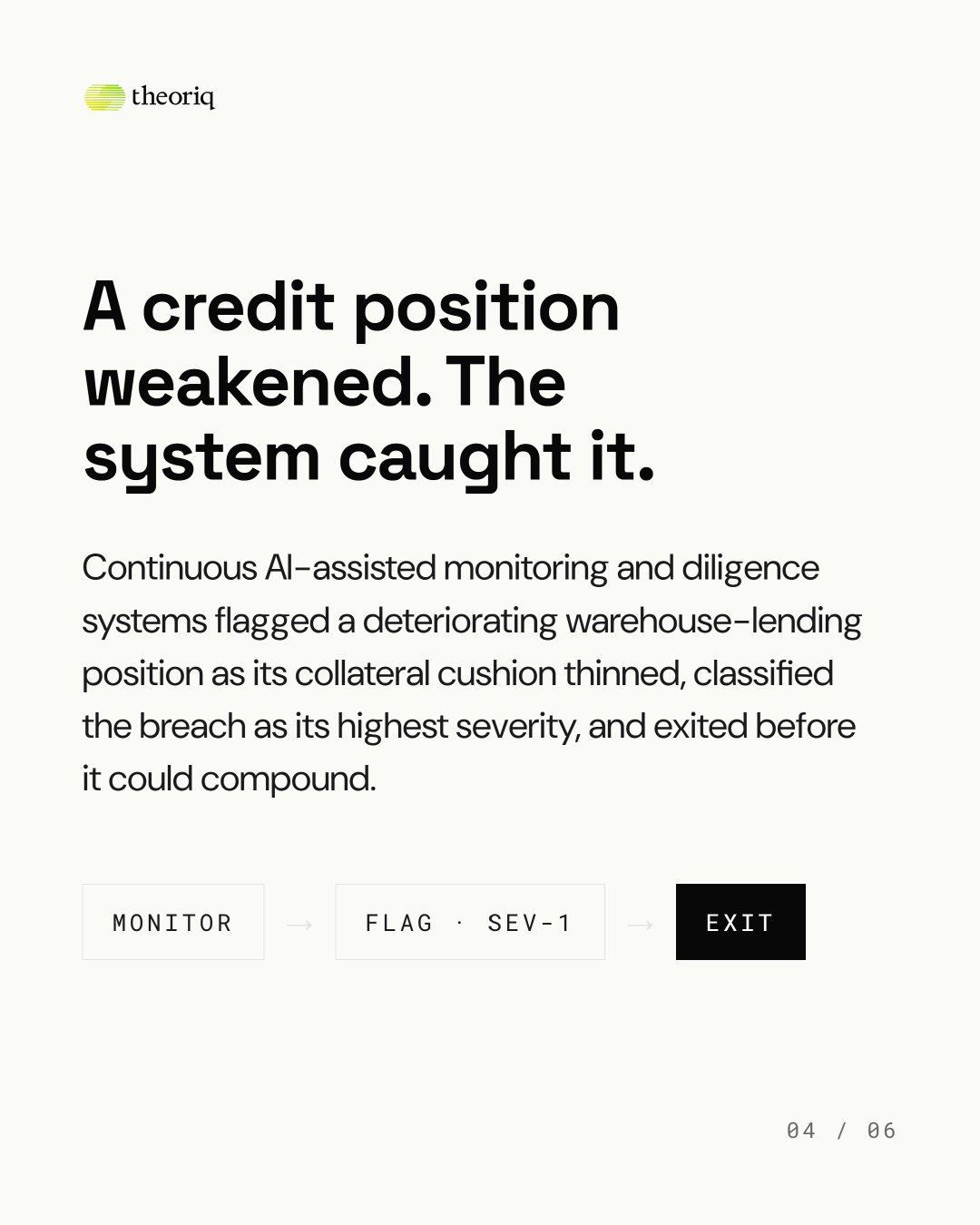
August carousel slide: a credit position weakened, and the system caught it
Brand – Stealth AI Fintech Startup, 2026

A brand in one week

A pre-seed company with an investor deck and nothing else. In one week it had a brand system; in the weeks after, its story at every length, a site, a social kit, and a pitch deck with the math checked. All of it handed off as a Claude skill the team runs without a designer or a writer.

Read the case study →
Delivered
  • Logo system and lockups
  • Typography and color
  • Brand book
  • Messaging, boilerplates, bios
  • Soft-launch website
  • Social kit for 13 platforms
  • Pitch deck rebuild
  • Brand and narrative as a Claude skill
Visuals withheld: company in stealth
Building with AI – Personal project, 2026

A live app my league uses every night

A gamecast for my 12-team fantasy basketball league, built with Claude. I set the product, design and release process and review every change. Claude writes the code.

8 of 12managers installed it
6use it every day
54changes shipped in two weeks
Read the case study →
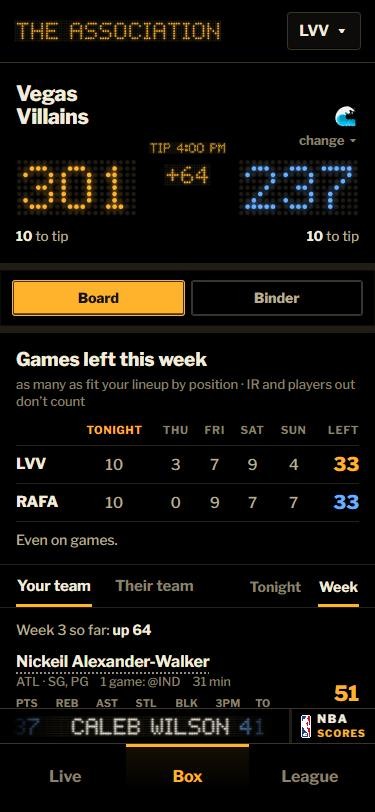
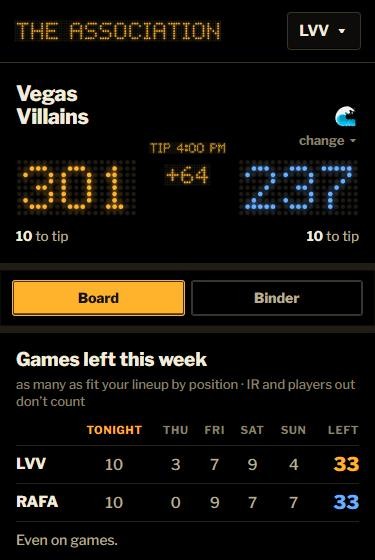
The app's LED matchup board and games-left table

Writing samples

2018 to 2026
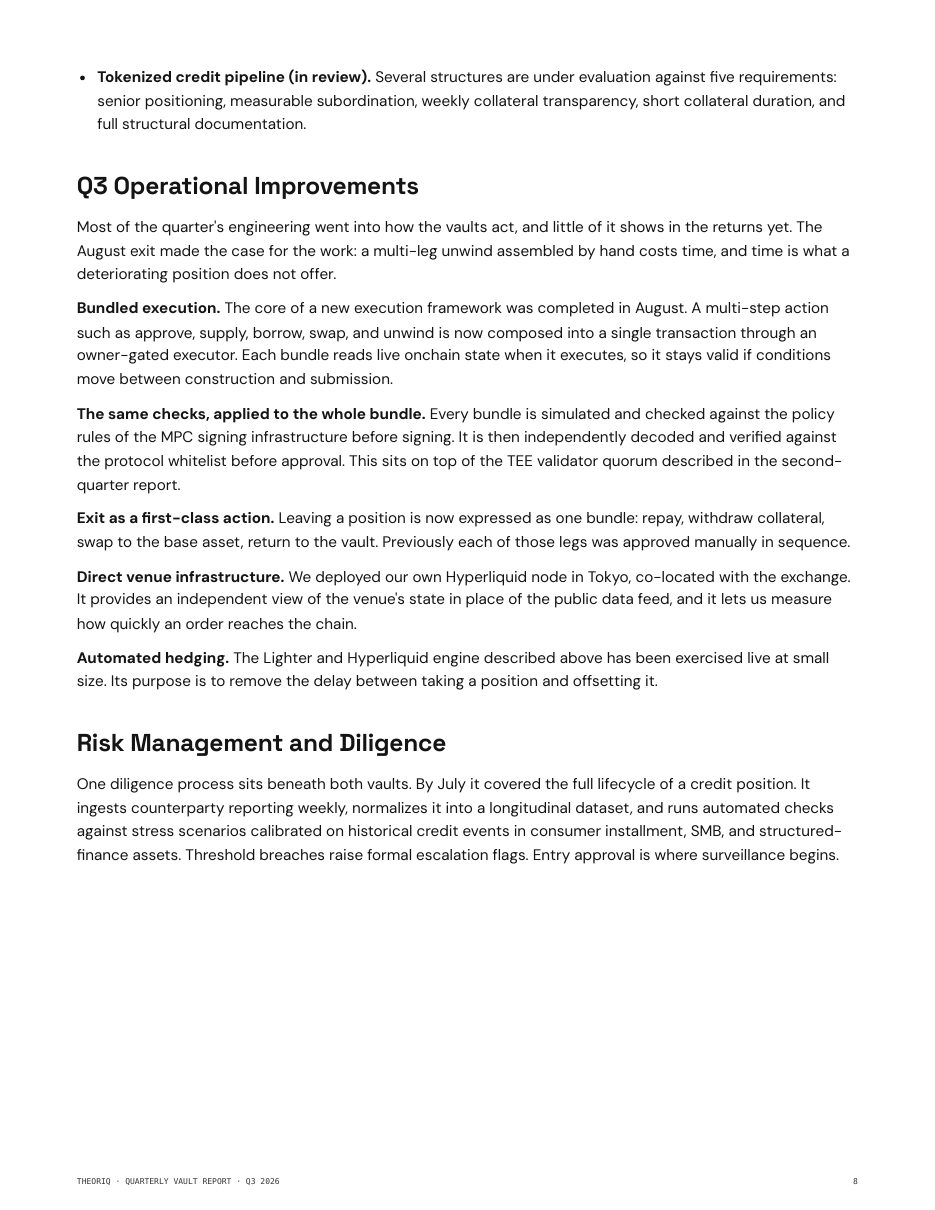
Theoriq Quarterly Vault Report, Q3 2026Theoriq, Oct 2026A quarter's performance, risk and fee data as a story investors can follow, including the month that went wrong.
Why Fordefi is Theoriq's differentiator in the RWA raceFordefi, Jul 2026A partner case study on how a transaction earns its signature, written for institutional readers. I wrote it; it ran under the partner's byline.
Mahojin: AI monetization for buildersStory, Aug 2024An AI product and its business model, made clear for creators and model builders.
Programmable IPStory, Feb 2024The foundational explainer for programmable IP, the category Story's positioning was built on.
Doodles 2 is coming to FlowFlow, Jan 2023A partner launch announcement for a large consumer audience: the product, the dates, and what holders needed to do.
Ending my chapter at Silver Screen and RollVox Media, Mar 2018Where the voice started: a farewell to the readers of a Lakers site after four years as editor in chief.
← All work

A content operation built for one person

How I covered a full content team's range at Theoriq with AI, and kept people in charge of what mattered.

Head of Content, sole content hire | May 2025 to Nov 2026 | Startup building AI-assisted yield products for tokenized assets
The 30-second versionFull story below
Problem

A full team's range of content, one content person, and a financial product's standard for every figure.

What I built

A daily research agent, a drafting setup with the brand rules built in, and code that renders finished assets.

Where people stayed

Every figure from the product lead. Written partner approval. Compliance sign-off. Nothing posted automatically.

Outcome

#1 in share of industry conversation among pre-launch peers, and a diligence package 7 institutional allocators used.

The problem

Theoriq needed a full content team's output: blog, social, email, docs, decks, quarterly reports, a diligence data room and crisis comms. It had one content person. And it carried a financial product's standards: every figure right, every partner approved in writing, everything external cleared by compliance. More with less could not mean checking less.

How the system works

Steps a person owns

The research agent

A Claude Code plugin ran every day over social and web search and came back with ranked post ideas and draft replies, each linked to the exact conversation. Its rules: nothing older than three days, skip anything it cannot verify, post nothing on its own. I picked, rewrote or dropped every item.

The production pipeline

Copy was drafted in a Claude project that held the brand canon down to hyphenation. Briefs for AI design tools locked every word and figure, so only the layout was open. Approved copy was rendered by code: social graphics from templates, decks as editable files, documents in the house format, every page checked before delivery. A deck that needed new figures was rebuilt cleanly, not patched by hand.

The human gates

No unverified statistic in external copy. Figures only from the product lead, never from a draft. No partner named without written approval. And we called the systems AI-assisted, never autonomous, because that is what they were.

Deciding what to publish

After a leadership change and a full repositioning, I wrote the content operating model for what came next. Its premise fit in one line.

Theoriq is not discovered. It is investigated.

A custodian, a lender or an investor spends twenty minutes looking and forms a judgment from two things: the record (listings, bios, what AI models say) and the reputation (what credible third parties say on their own). So the plan split into three workstreams: fix the record, publish work useful to people who do not care about us yet, and earn coverage without paying for it.

It cut volume from 50 posts a month to 5 to 7 a week with hard gates. Its scorecard put record accuracy first and reach last, never a target. It refused to claim deposits or investor conversion, because content cannot own them. It ruled out manufactured coverage. And it set two goals that could fail. It was a draft pending CEO review when I left.

Fixing the record

One goal: within 90 days, 3 of 5 major AI models describe the company the way it now describes itself. I rewrote the bio and descriptions, audited every listing, and corrected outdated positioning in partner, event and vendor copy before it went out.

Tested in fresh sessions with one prompt: Grok, Claude and Perplexity describe the company correctly. ChatGPT gets it partly right. Gemini still leans on older material. Goal met.

Results

One person covered daily social for 299K followers, launch packages for two flagship products, partner announcements, the quarterly reports and an institutional diligence package. Theoriq reached #1 in share of industry conversation among pre-launch peers on Kaito's leaderboard and held it through launch. Seven institutional allocators used the diligence package in their reviews. At exit, the website, design system and report assets were handed off documented, so the team keeps producing without me.

The Q3 report case study shows the system at its hardest: a bad month, told plainly.
What I would bring to a teamAI is very good at scanning, drafting and assembling. People should own the claims, the approvals and the voice. The design work is deciding exactly where that line sits and writing it down.

← All work

← All work

Telling a hard quarter straight

How we reported a credit position the vaults had to exit early, in the same plain terms as the good months.

Head of Content | Theoriq, August to October 2026 | Startup building AI-assisted yield products for tokenized assets
The 30-second versionFull report below
Situation

In August the AI diligence agent flagged a lending exposure at its highest severity. The vaults exited early and paid for it.

How I wrote it

The month it happened, then again on page one of the quarterly report, with the cost stated.

Where people stayed

Figures from the product and quant leads, positioning from the CEO, compliance sign-off before anything traveled.

What shipped

The August report and its LinkedIn carousel, then a 10-page quarterly report with an X thread and a LinkedIn post.

What happened

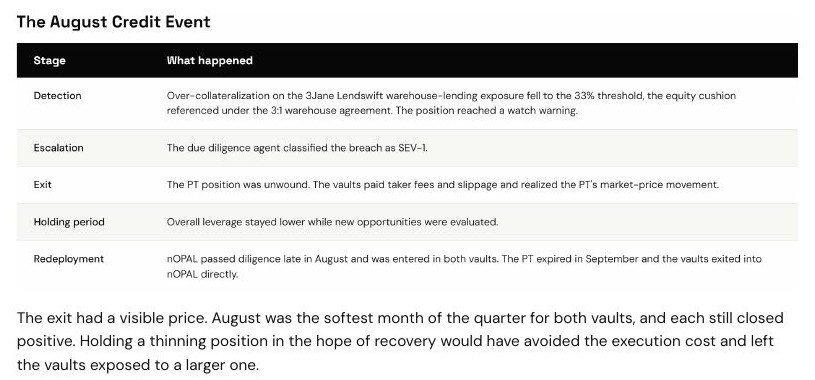
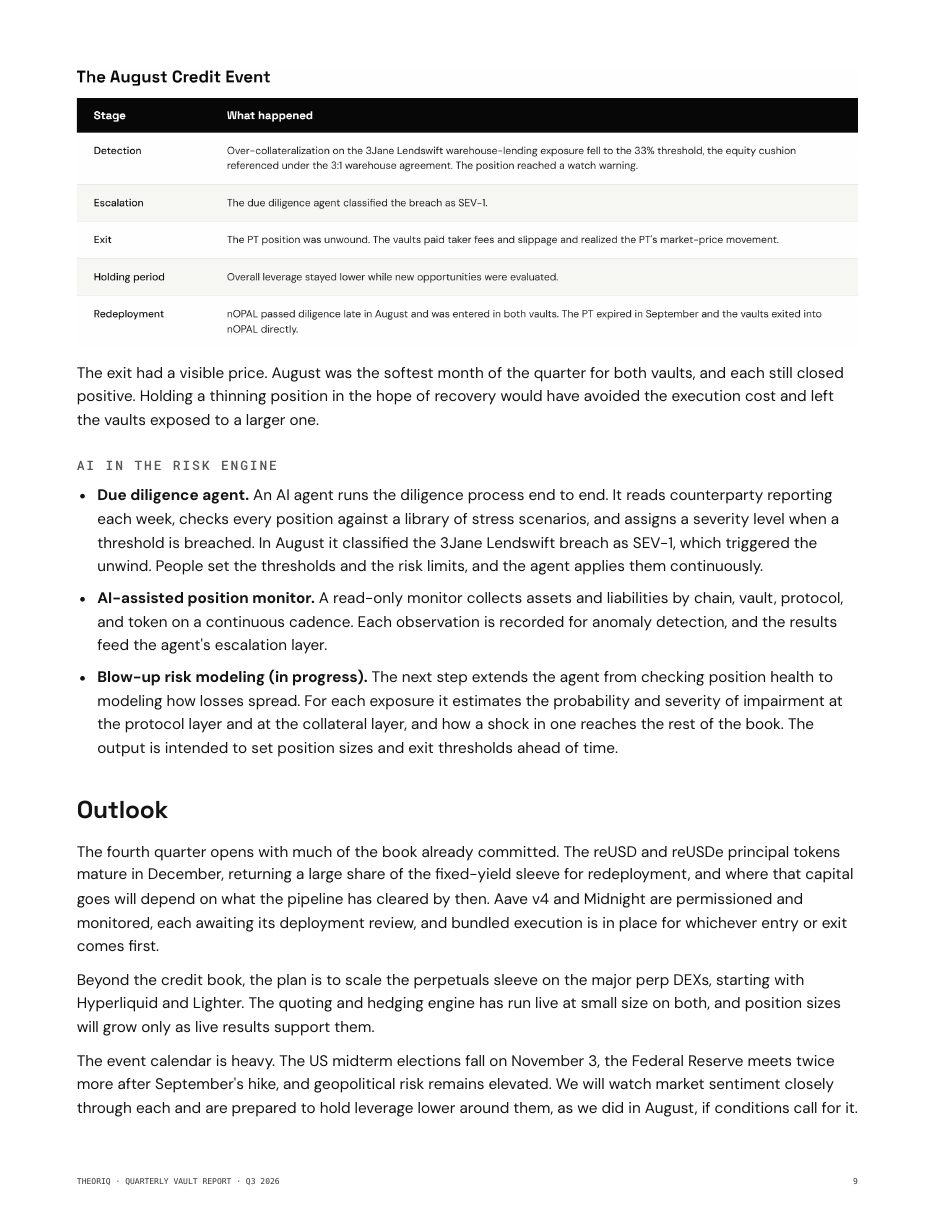
The collateral cushion on one lending exposure fell to its threshold. The diligence agent classified the breach at its highest severity, and the position was sold before maturity: trading fees, slippage, and the market price of the day. August became the softest month of the quarter for both vaults. Each still closed positive.

The month it happened

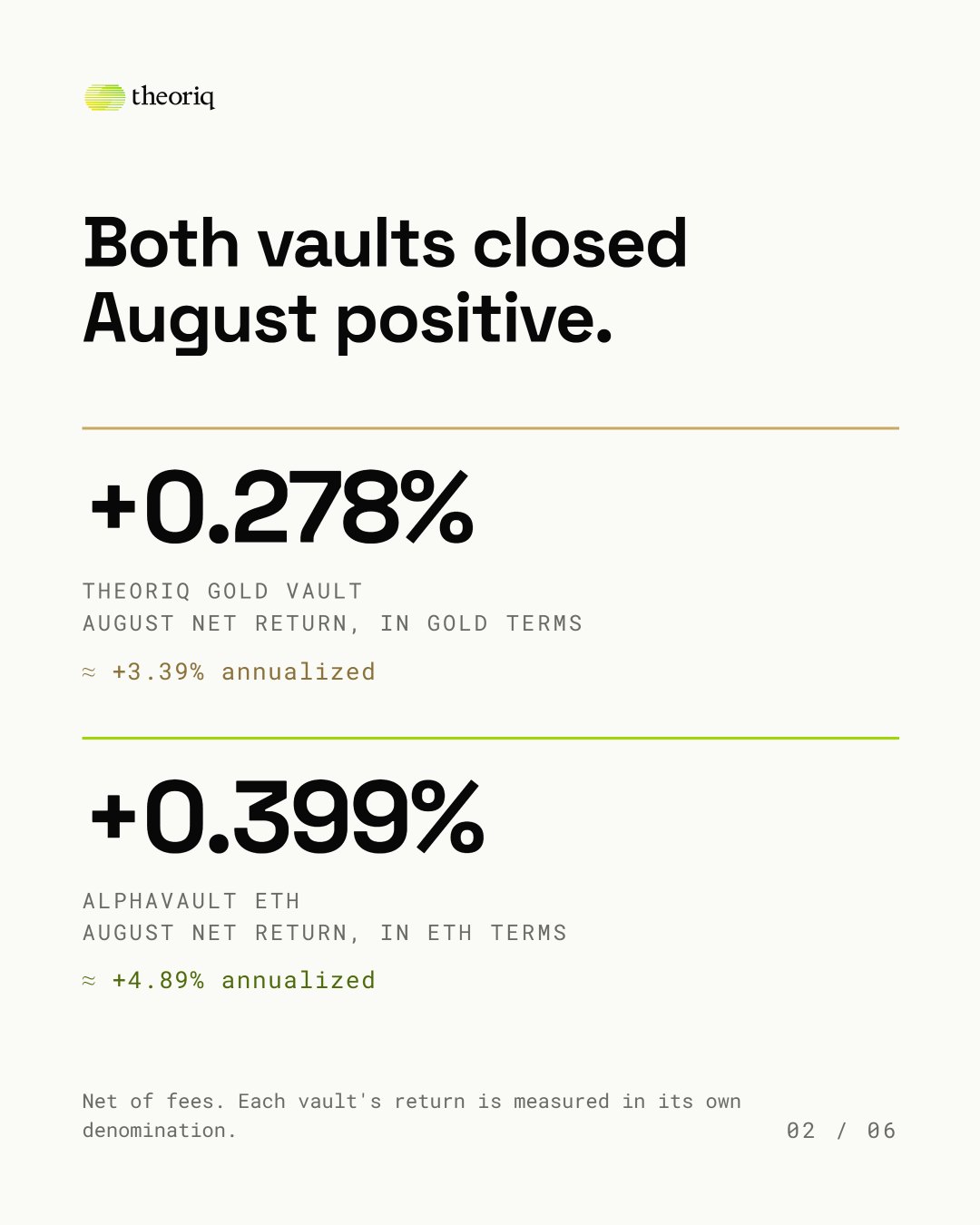
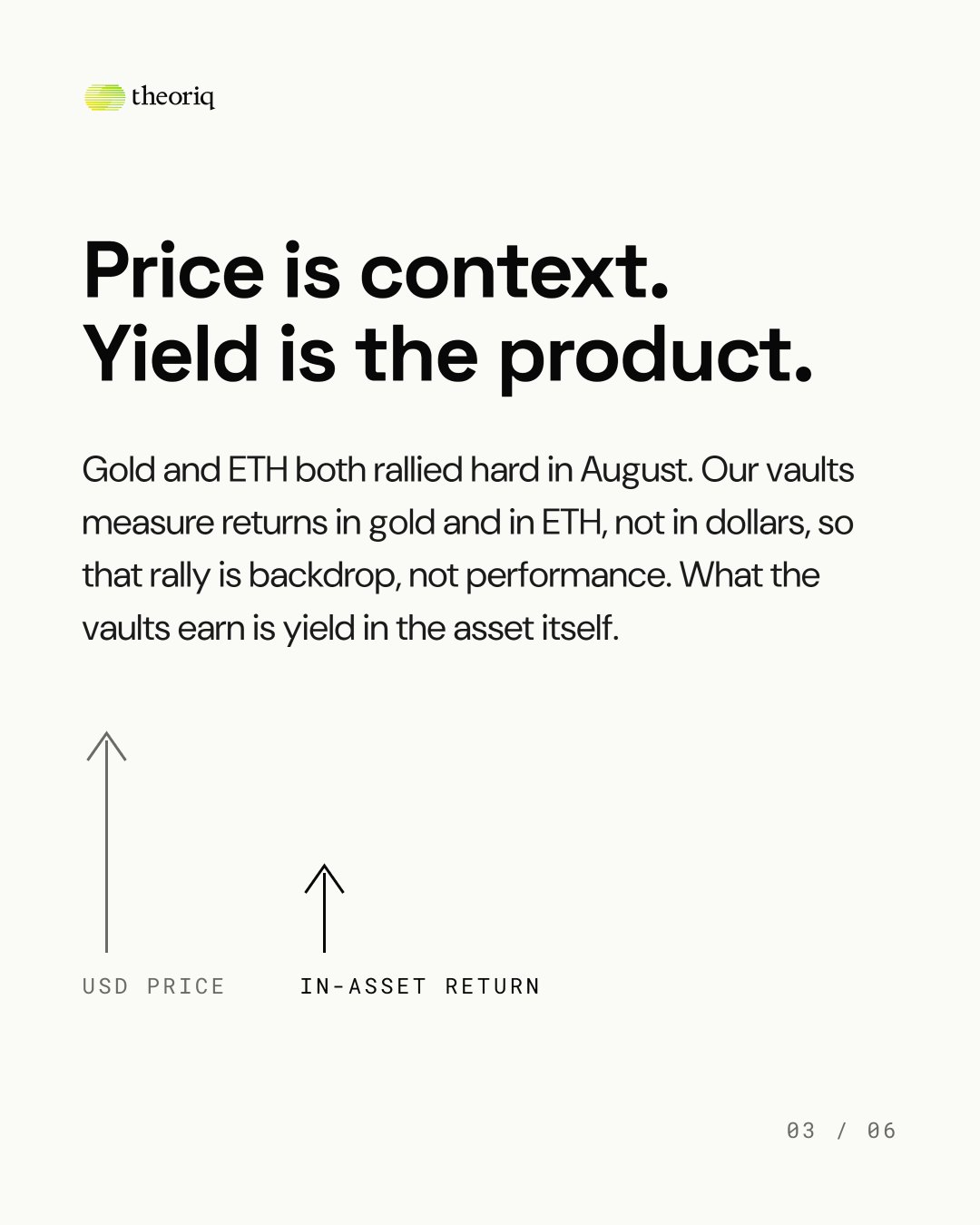
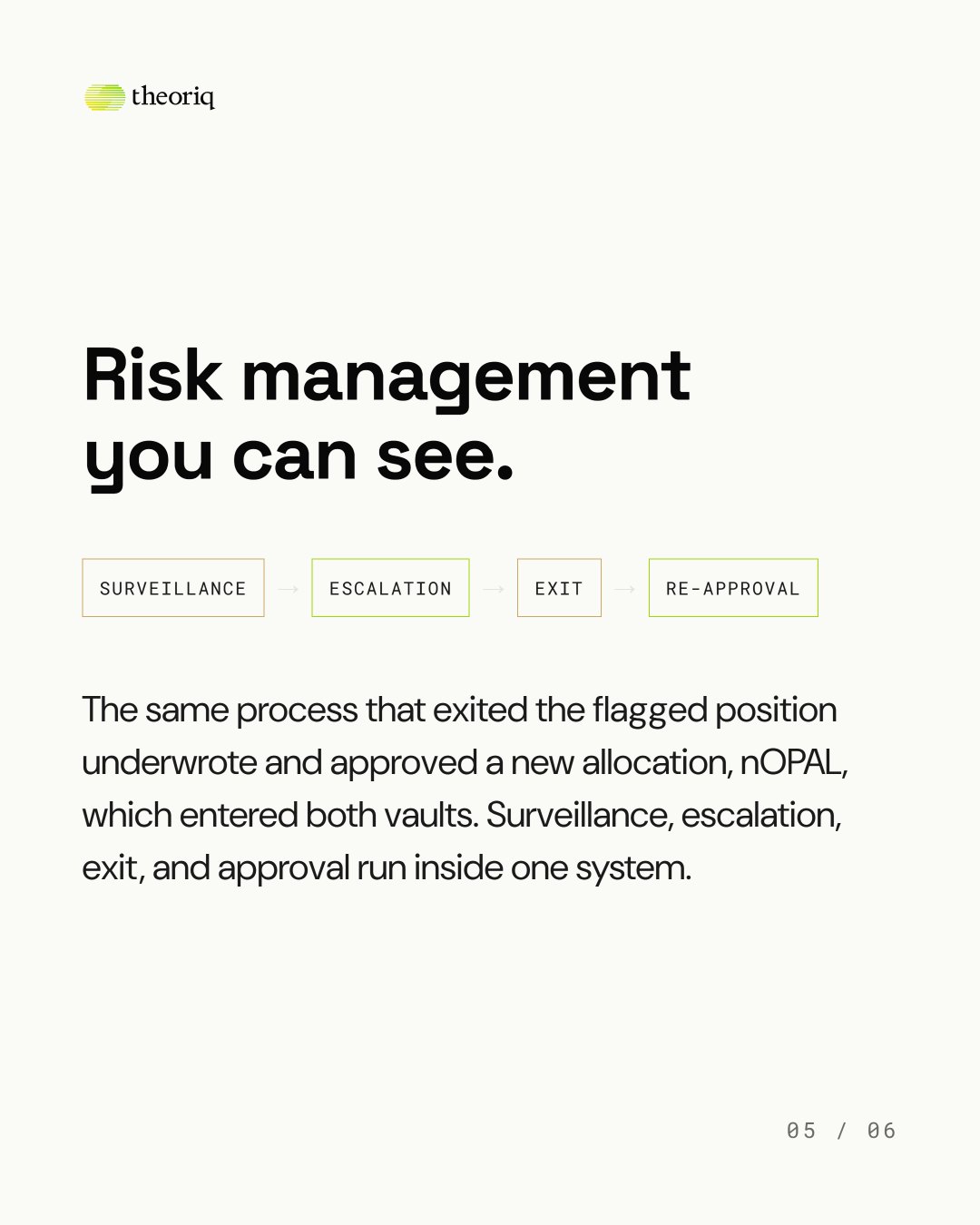
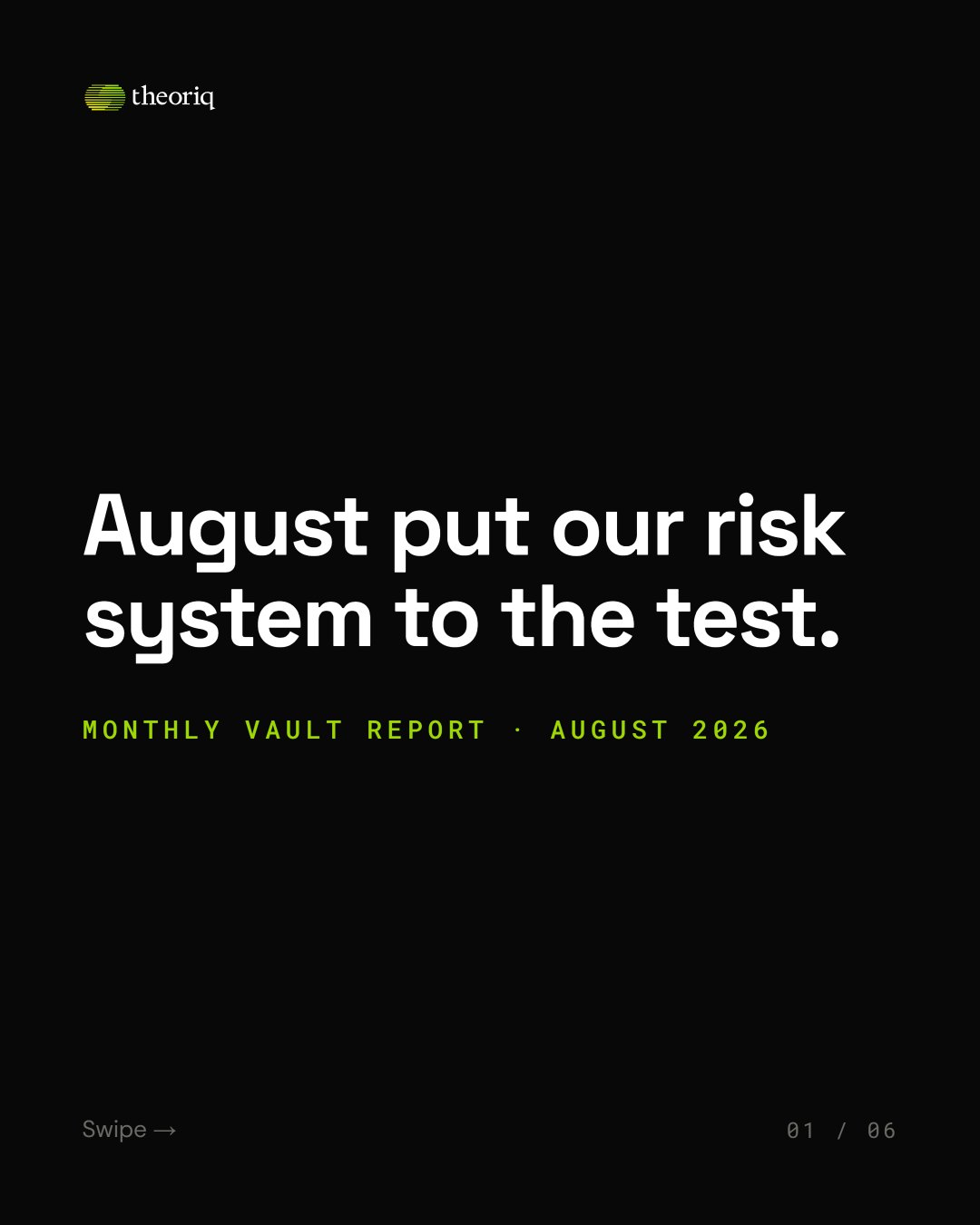
The event went into the August report, not saved for quarter's end. Its LinkedIn carousel led with it, gave both vaults' returns, and walked through what the system did: monitor, flag, exit, re-approve.

Slide 1: August put our risk system to the test Slide 2: both vaults closed August positive, with net returns Slide 3: price is context, yield is the product Slide 4: a credit position weakened and the system caught it Slide 5: risk management you can see, from surveillance to re-approval Slide 6: read the full August report

The August report carousel, as published on LinkedIn.

How I wrote the quarter

The easy version buries a month like that in a footnote. I put it in the opening paragraph of page one, explained it again under allocation changes, and gave it a stage-by-stage table in the risk section: detection, escalation, exit, holding period, redeployment.

"The exit had a visible price."

The report says the cost out loud, then makes the case: a stretch of clean months shows the design running. A position caught and closed before it compounds shows it working.

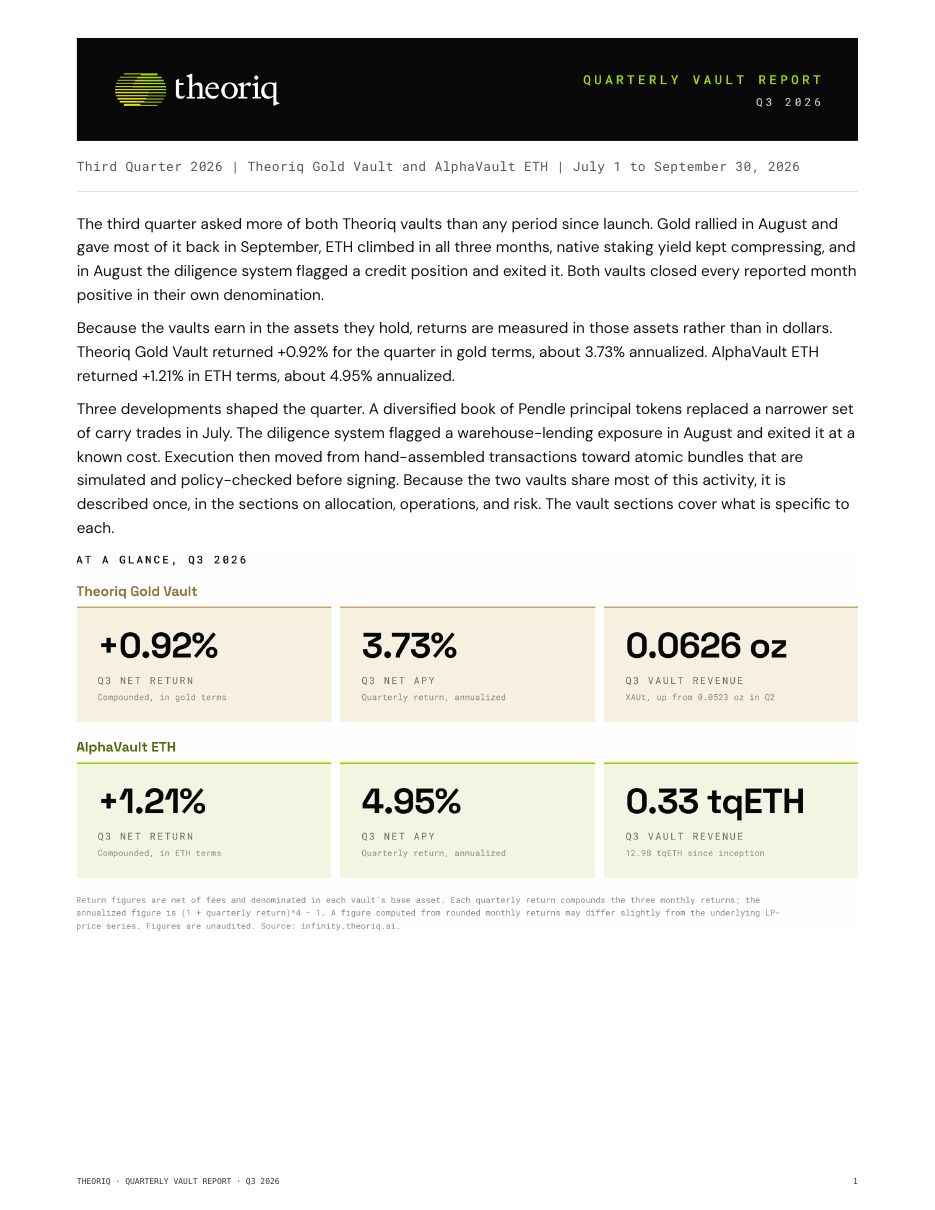
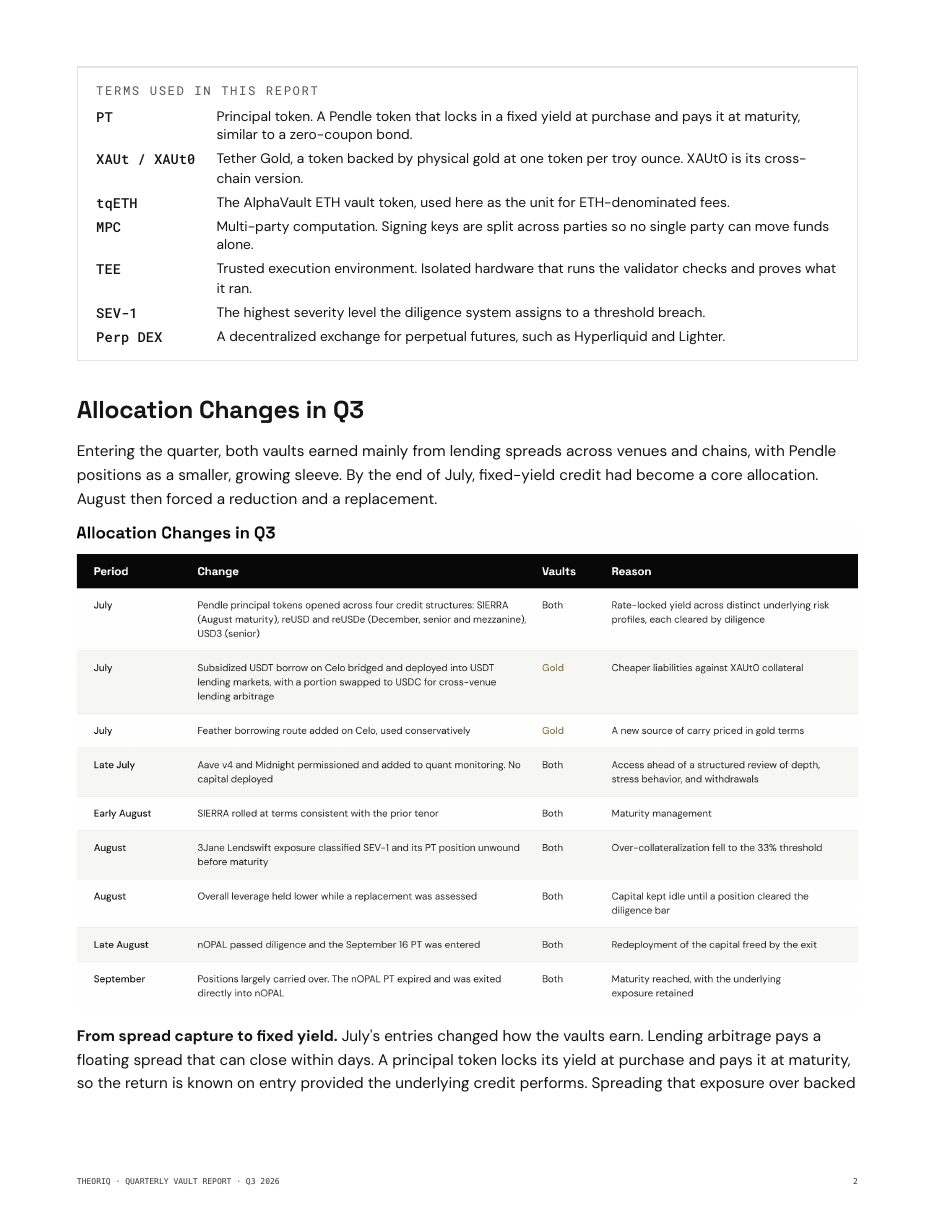
It was also written for readers outside the industry: a glossary up front, returns explained once in the assets the vaults hold, and one shared account of what both products did instead of telling it twice.

The report's stage-by-stage table of the August credit event, followed by the paragraph stating its cost
From page 9: the credit event, stage by stage, and what it cost.

Who signed off

The CEO owned positioning. The product and quant leads owned every figure and the market data. The head of growth handled compliance. I coordinated that sign-off for every report and kept each figure traced to its source. The July operating model had called for exactly this kind of transparency piece; at the time, we published none.

Why it mattersA company is judged by how it handles a bad month. A report that tells the bad part plainly earns trust for every good number in it.

Read the full Q3 report →

← All work

← All writing

Theoriq Quarterly Vault Report, Q3 2026

A quarterly performance report for two investment products, written and designed end to end for depositors and institutional readers.

Writing sample | Theoriq, October 2026 | 10 pages | Figures unaudited, as published by Theoriq

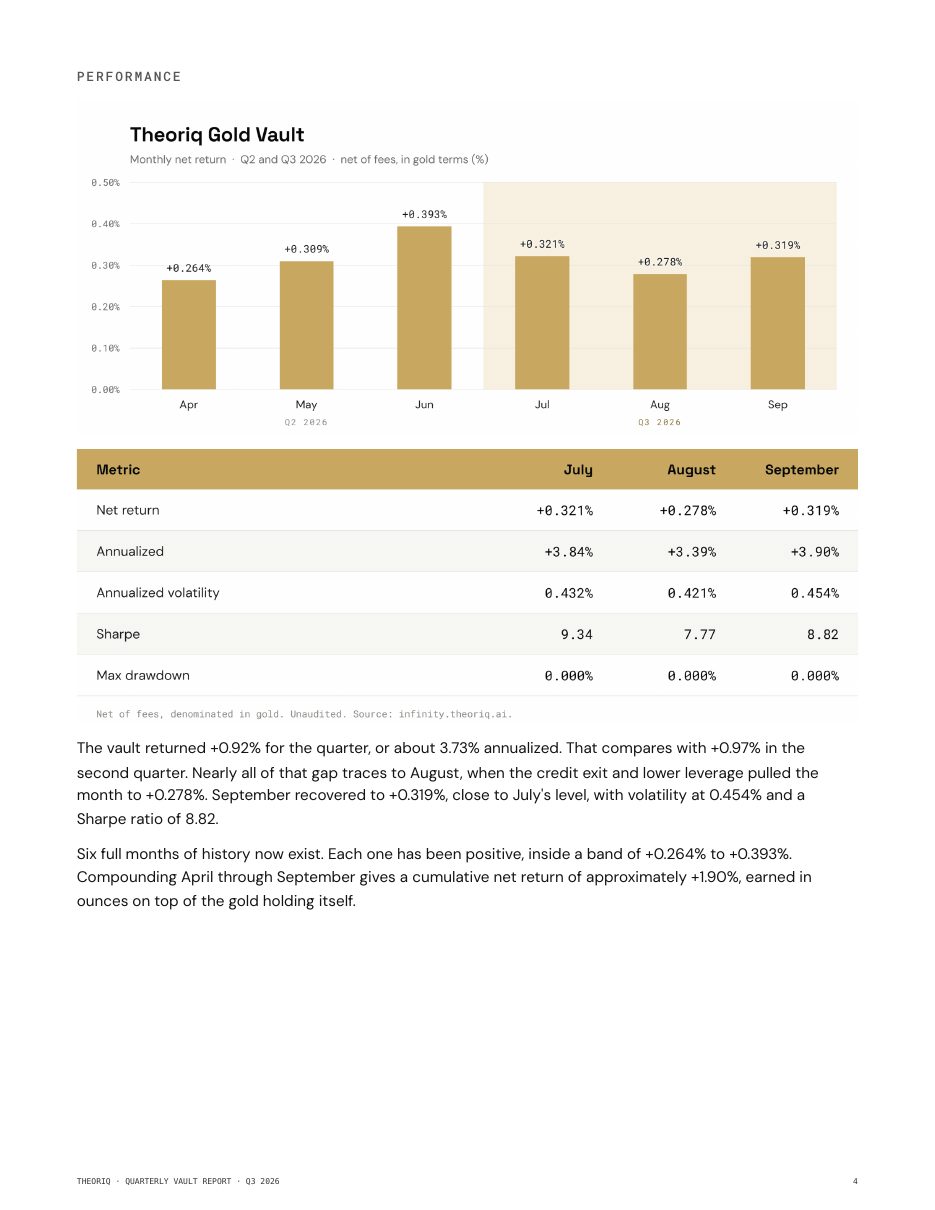
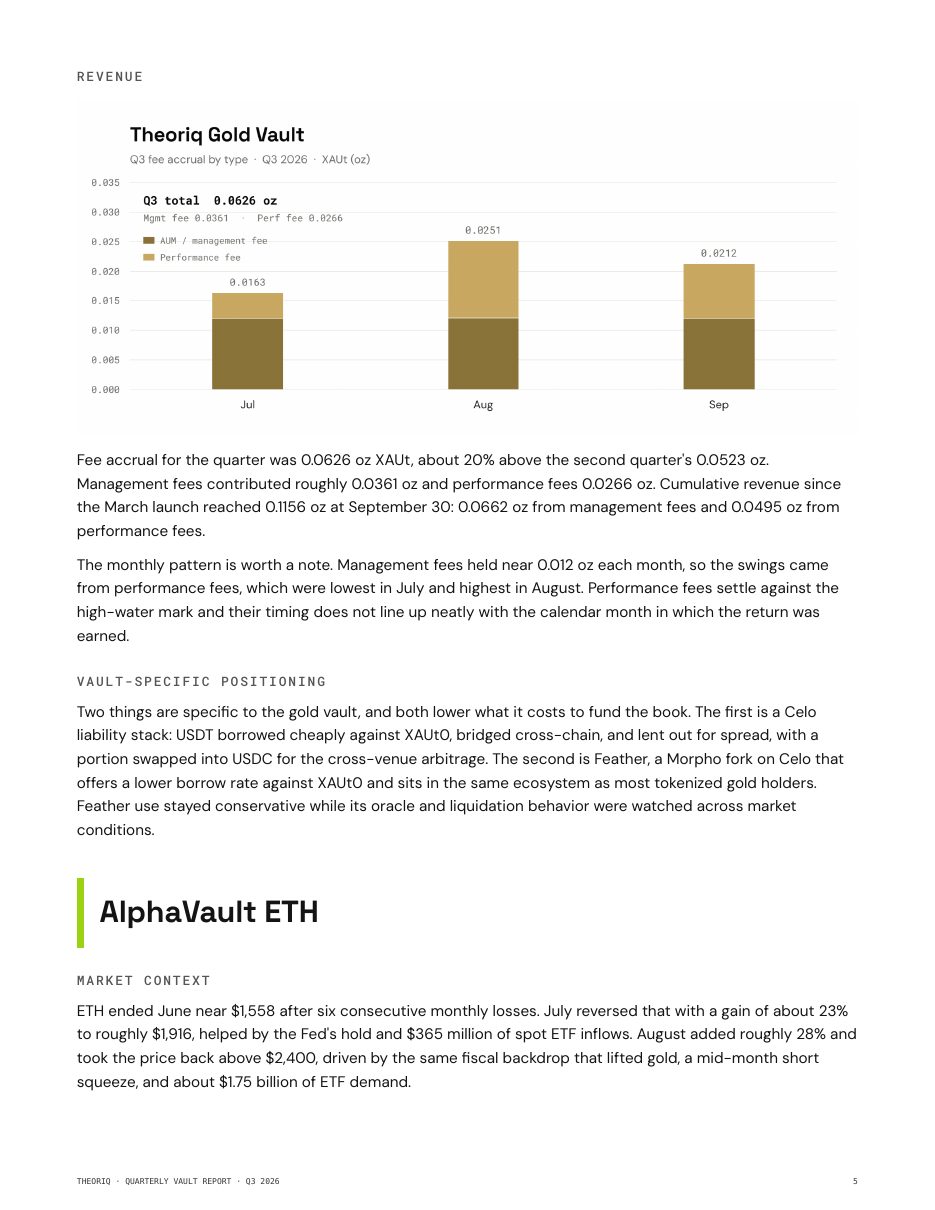
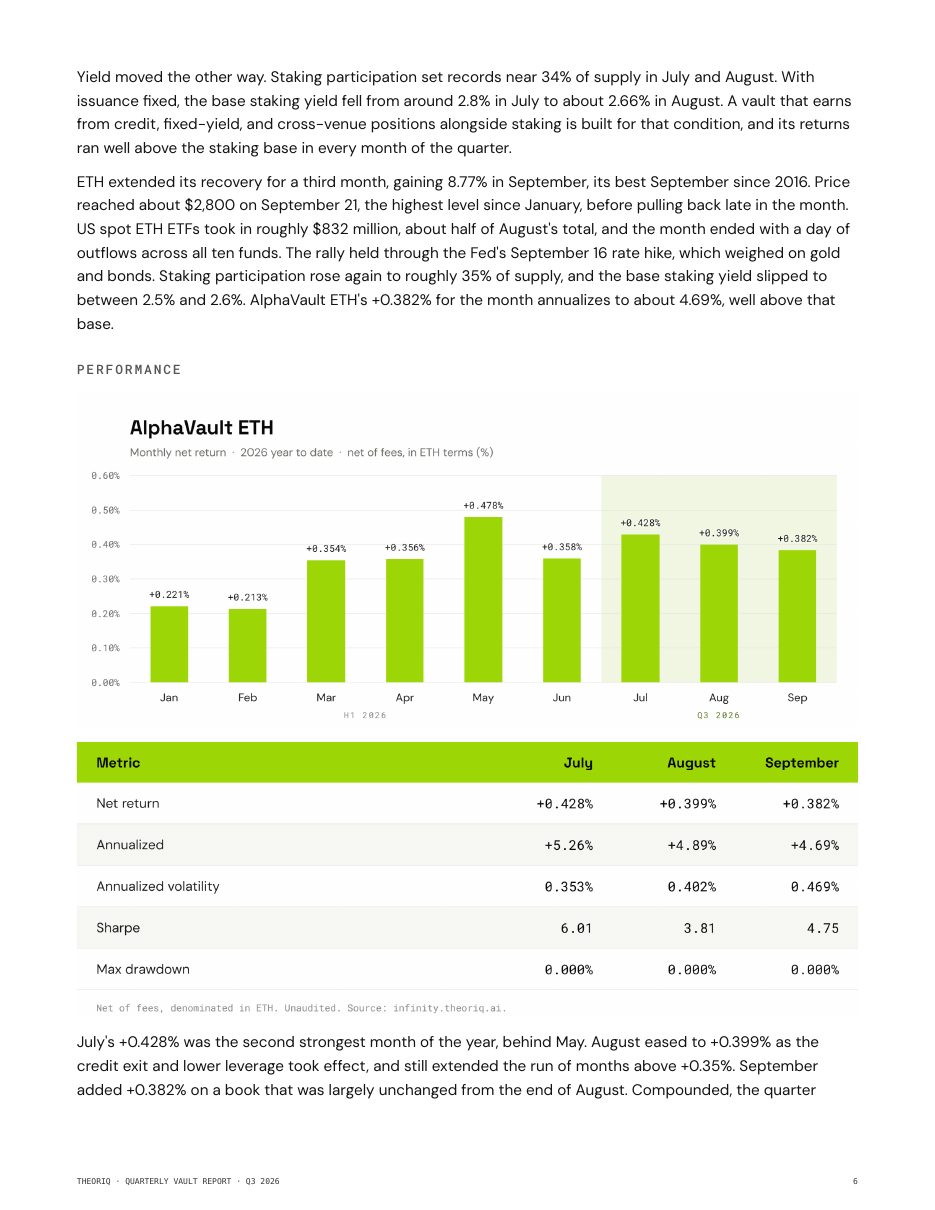
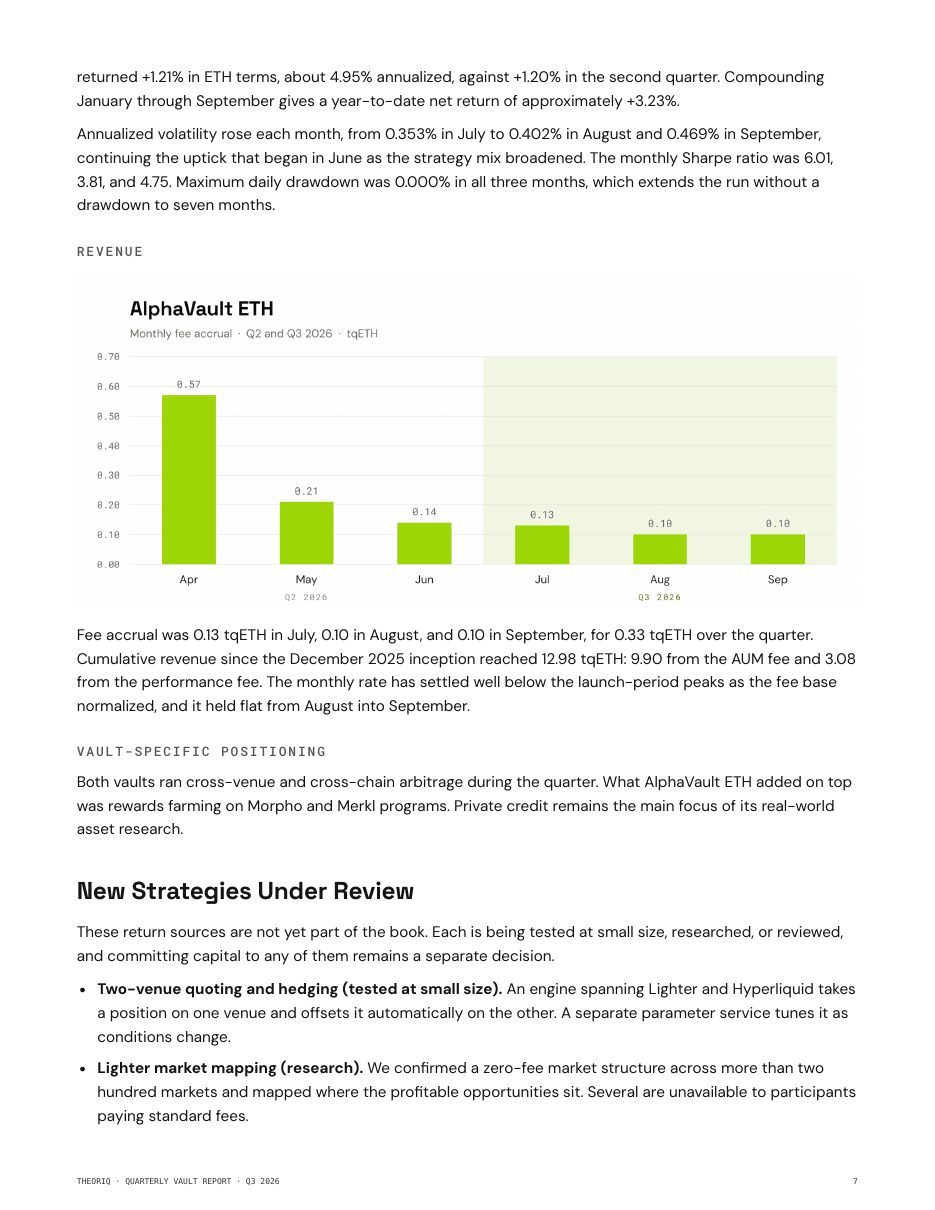
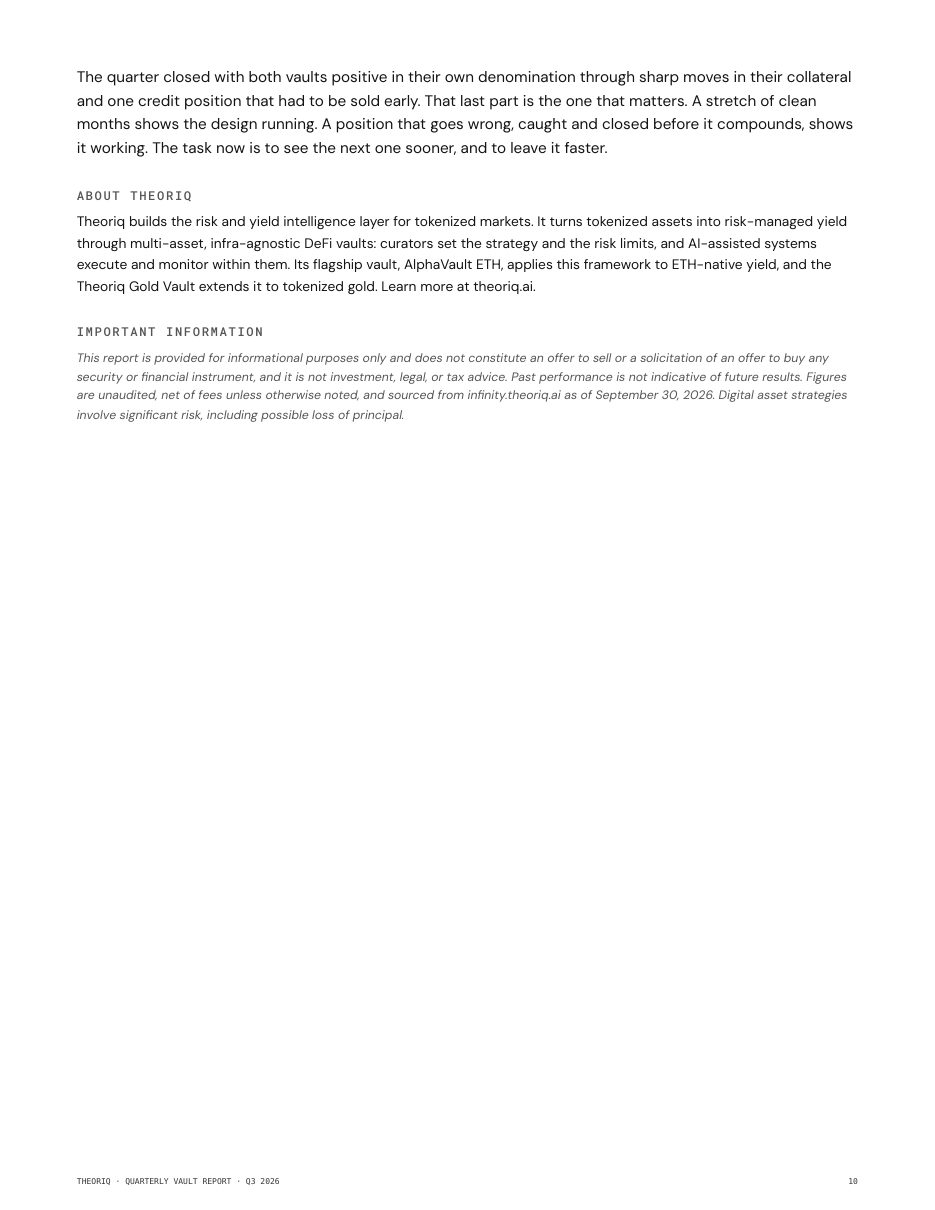
Monthly returns, risk metrics, fee accruals and market context, turned into a story people can follow, with a glossary up front for readers outside crypto. The quarter's hardest moment, a credit position exited early at a known cost, is on page one. How that was handled is its own case study.

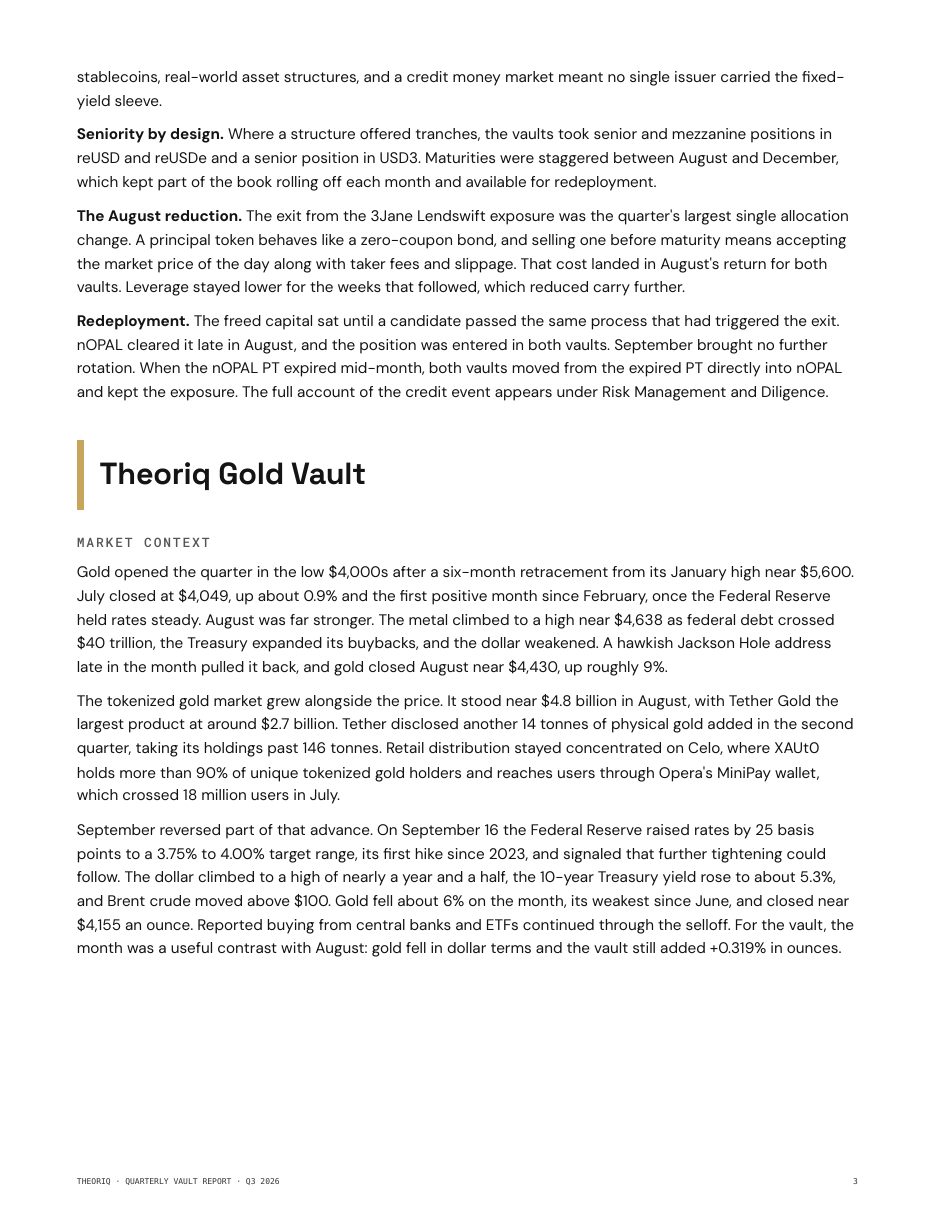
Page 1: cover, introduction and Q3 results at a glance Page 2: glossary and allocation changes table Page 3: allocation changes and Theoriq Gold Vault market context Page 4: Theoriq Gold Vault performance chart and metrics Page 5: Gold Vault revenue and positioning Page 6: AlphaVault ETH market context and performance Page 7: AlphaVault ETH metrics, revenue and new strategies Page 8: operational improvements and risk management Page 9: the August credit event, AI in the risk engine, and outlook Page 10: closing, about Theoriq and important information

← All writing

← All work

A live app my league uses every night

A gamecast for my fantasy basketball league, built with Claude and run like a product: a roadmap, release rules, tests and a decision log.

Personal project | October 2026 to now | Built with Claude Code on Cloudflare
The 30-second versionFull story below
Goal

My 12-team league runs on ESPN. I wanted a companion they would open every night on their own.

What I built

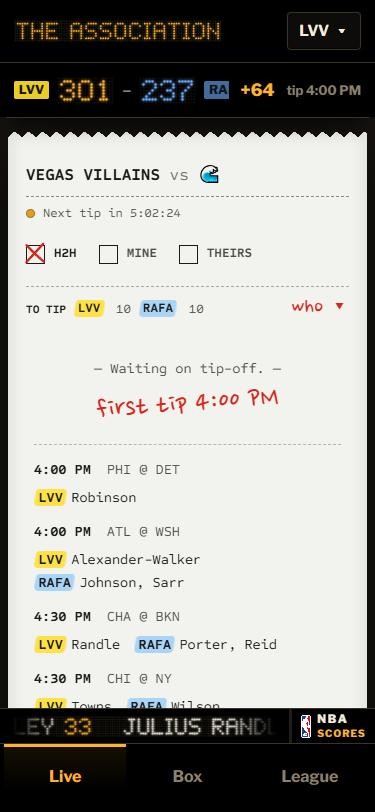
A live gamecast styled as a Vegas sportsbook: matchup boards, play-by-play tickets, recaps and collectible cards, installable on a phone.

Who did what

I set the product, design and process and review every change. Claude writes the code.

Outcome

8 of 12 managers installed it, 6 use it every day, and 54 changes shipped in about two weeks.

Live tab: the bet ticket before tip-off, with the night's games for each side
Live: the ticket before tip-off
Box tab: the LED score board and games left this week
Box: the LED board and games left
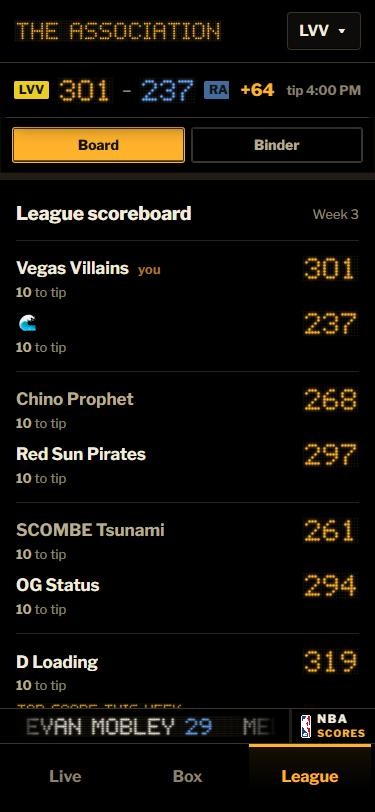
League tab, Binder: my collection of earned player cards
League: the cards in my binder

Screenshots from my team's view on Nov 4, 2026.

The concept

The league's night as a Vegas sportsbook, built from three materials with one job each. LED boards carry every number that moves. A thermal bet ticket carries each manager's play-by-play, with running scores and bonus stamps. Red pen carries the annotations. Around that: box scores, a crawl of stat lines and NBA scores, weekly recaps and payouts, and cards that managers earn and collect.

Run like a product

The roadmap follows the NBA calendar: the NBA Cup, Christmas, the All-Star break and trade deadline, then the fantasy playoffs. One big drop beats a drip of updates. Friday freeze before a Monday launch. Features ship behind flags so they can launch on a set day or be pulled without a deploy, and a staging copy with its own storage rehearses every release with real league data.

Working with AI

Claude works under written rules: discuss before building, mock before anything visual, data correctness before design, say what was and was not tested. A 300-line decision log keeps choices from being lost between sessions. Any change that writes to stored data gets a fresh-eyes review from a separate session that reads only the diff. On October 29 that caught a bug my own review had missed.

One rule came from a mistake. Early on, record-writing logic went live tested only against a fake league, and the league saw a recap that should never have existed. Now anything that writes to the records is rehearsed on staging first.

8,100 lines of code. 17 test files, run on every change. A post-deploy check that emails me if the live site fails. Free tiers only. Read-only league access.

What it showsThis is how I would run AI work on a content team: clear rules, a person who owns every decision, a record of why, and a review step for anything that can go wrong quietly.

The live app is private to the league. I'm happy to walk through it in an interview.

← All work

← All work

A brand in one week

A pre-seed AI fintech company had an investor deck and nothing else. One week later it had a brand, and soon after, a story told at every length.

Brand & Content Consultant | Stealth AI Fintech Startup | September to November 2026 | Name and visuals withheld
The 30-second versionFull story below
Starting point

No website, no social accounts, no design team, and a pitch deck made in a hurry for investor meetings.

What I built

Logo system, type and brand book in one week. Then the narrative at every length, the site, a social kit, and a rebuilt pitch deck.

Where judgment stayed

AI tools explored directions fast. I chose what fit, checked every number in the deck, and kept the CEO's words marked as hers.

Outcome

Direction signed off, a deck the CEO credited with stronger investor meetings, and a brand and story the team keeps using without a designer or a writer.

The week

I told the team I would be heads down for a week on brand, and came back with the logo system, typography and a brand book written without design jargon, so anyone on the team could use it. I presented the chosen mark next to the directions I did not choose. Seeing them confirmed the choice instead of reopening it.

When the CEO wanted a typeface that felt more futuristic, six headline options were in the brand for comparison the same day. The team chose one unanimously. I kept one concern on the record, its thin strokes at small sizes, and set a floor: the display face at 24px and above, the body face below.

The deck

I rebuilt the pre-seed deck with the CEO across many rounds, working in feedback from live VC calls on market sizing, the revenue model and the product's moat. Every round came with a sentence-level change log that kept her words separate from mine.

Before it went out, I checked the arithmetic.

The revenue model used three conflicting fee bases, two different market figures for 2030, and a timeline with gaps. I flagged each one so it could be fixed before an investor found it. The CEO credited the deck with stronger investor meetings.

The narrative

The brand and the deck were built on the same story, and I wrote that story in every length it needed: the positioning and messaging, boilerplates at 50 and 150 words, press bios, the landing page, and a long-form piece aimed at the buy-side funds the product is for. Each one explains a technical product to readers without a markets or coding background.

The handoff

The soft-launch website, tested from phone to wide desktop. A social kit with assets at exact sizes and an account plan for 13 platforms. The full brand kit as editable files. And the whole thing packaged as a Claude skill with a prompt pack: the visual system and the narrative together, so the team keeps producing on-brand images, posts, slides and copy without a designer or a writer.

What it showsA brand is not a logo, it is a system: one story, told consistently at every length and on every asset, that scales to whatever the team needs next and still works when the person who built it is gone.

← All work

← Home

DREW GARRISON

Head of Content – AI-Native Content Operations

Las Vegas, NV | [email protected] | Portfolio | LinkedIn | @DrewGarrisonSBN

Content leader who builds scalable content systems. Twelve years explaining new, complicated products across AI, consumer tech, e-commerce, and sports media. Most recently ran an entire content function solo by building AI-assisted research and production workflows, while keeping editorial judgment, taste, fact-checking, and approvals human.

EXPERIENCE

Theoriq – Head of ContentMay 2025 – Nov 2026

Startup building AI-assisted yield products for tokenized assets

  • Ran the entire content and communications function as a one-person team: blog, social (299K followers), email, website, docs, investor and partner decks, performance reports, and crisis communications.
  • Built AI-assisted production systems in Claude Code: a daily research agent that drafted engagement recommendations for human review, and pipelines that turned approved copy into finished decks, documents, and graphics.
  • Set the editorial standard for AI-assisted work: verified figures, written partner approvals, and compliance review before publishing.
  • Took the company to #1 in share of industry conversation among pre-launch peers (Kaito leaderboard) and held it through launch; led launch communications for two flagship products, one reaching $21M+ in deposits.
  • Wrote and designed seven performance reports and the institutional diligence package (tear sheet, strategy summary, diligence FAQ); 7 institutional allocators used the package in their reviews.
  • Proposed a measurement-led content operating model after the company's repositioning; set a goal to correct how major AI models describe the company, and met it within the quarter.
  • Rebuilt the company website and a design system for reports and social, both handed off fully documented.
Stealth AI Fintech Startup – Brand & Content ConsultantSep – Nov 2026
  • Built the brand from zero: logo system, typography, and brand book in one week, adopted as presented; then messaging, a soft-launch site, and a social kit.
  • Rebuilt the pre-seed pitch deck with the CEO around live VC feedback; she credited it with stronger investor meetings.
  • Packaged brand and narrative as a Claude skill and prompt pack so the team produces on-brand work without a designer or writer.
Story Protocol – Senior Content MarketerOct 2023 – Jan 2025

Blockchain platform for registering and licensing intellectual property

  • Built the content function from scratch, owning blog, developer docs, email, and social from early stage through public launch.
  • Co-defined how the company explained "programmable IP," a new category, shaping brand voice, messaging, and positioning.
Dapper Labs – Communications ManagerApr 2021 – Feb 2023

Consumer digital collectibles, including NBA Top Shot and NFL All Day

  • Owned content, social, and community for NBA Top Shot, NFL All Day, and the Flow developer ecosystem.
  • Shipped 20+ campaigns that doubled Twitter following from 90K to 180K and lifted social engagement 60%.
Merchbar – Growth Marketing ManagerMar 2018 – Oct 2020
  • As sole growth marketer, grew monthly revenue 300% and email revenue 900% YoY, contributing to $3.1M+ in lifetime sales.
Silver Screen & Roll (Vox Media) – Editor in ChiefJan 2014 – Mar 2018
  • Grew traffic on Vox's Lakers vertical 260% in four years, leading a distributed team of credentialed NBA press publishing 11+ posts daily.

SKILLS

AI & Systems: Claude Code, agent workflows, MCP connectors, review standards for AI-assisted content; built and run a live web app for a 12-team league, used daily by half of it (Cloudflare Workers, GitHub)

Content & Brand: editorial strategy, narrative and messaging, positioning, brand identity, launches, investor and partner decks

Tools: Webflow, Figma, DocSend, HTML/CSS, Playwright

← Home